
Vermiculite concrete: uses and mix proportions

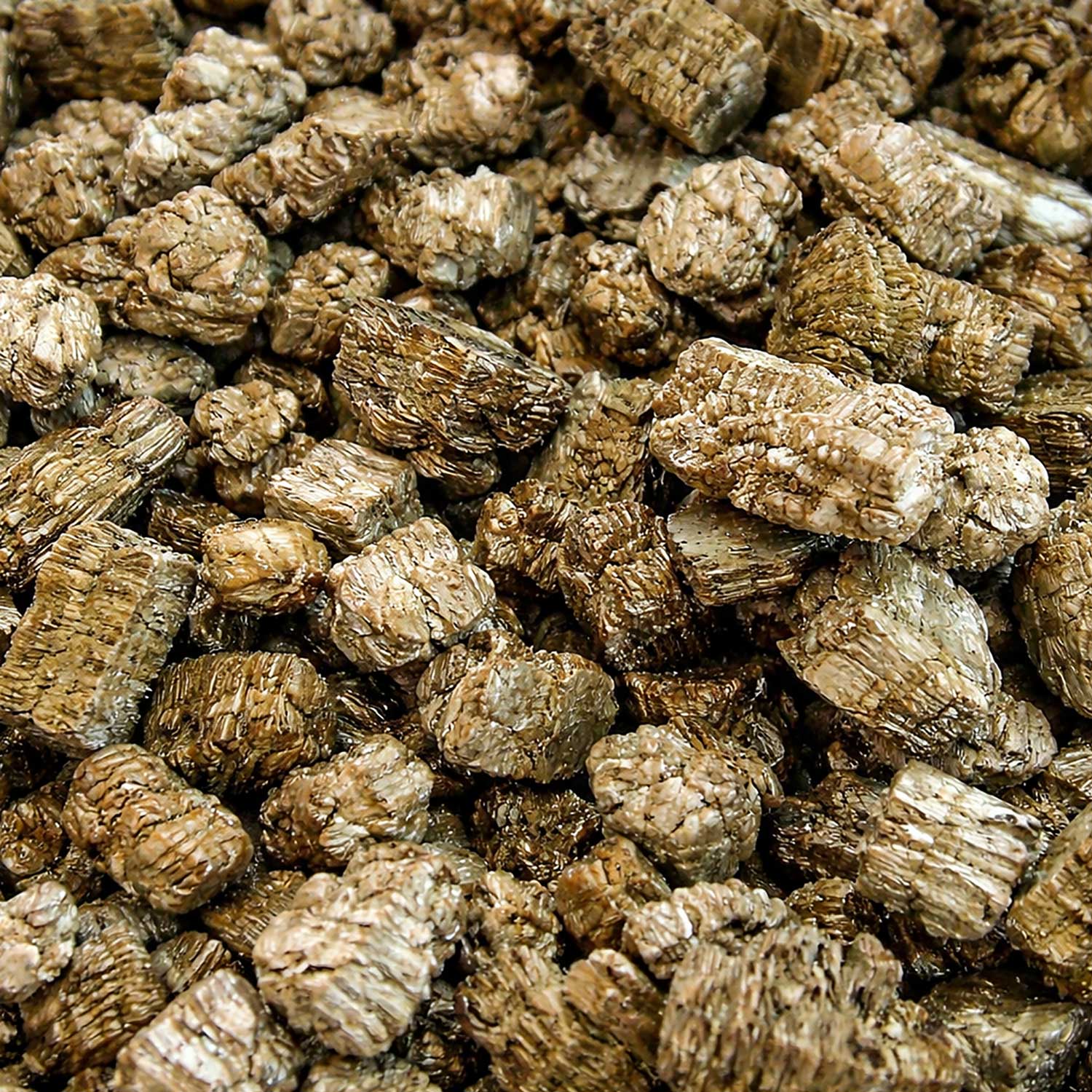
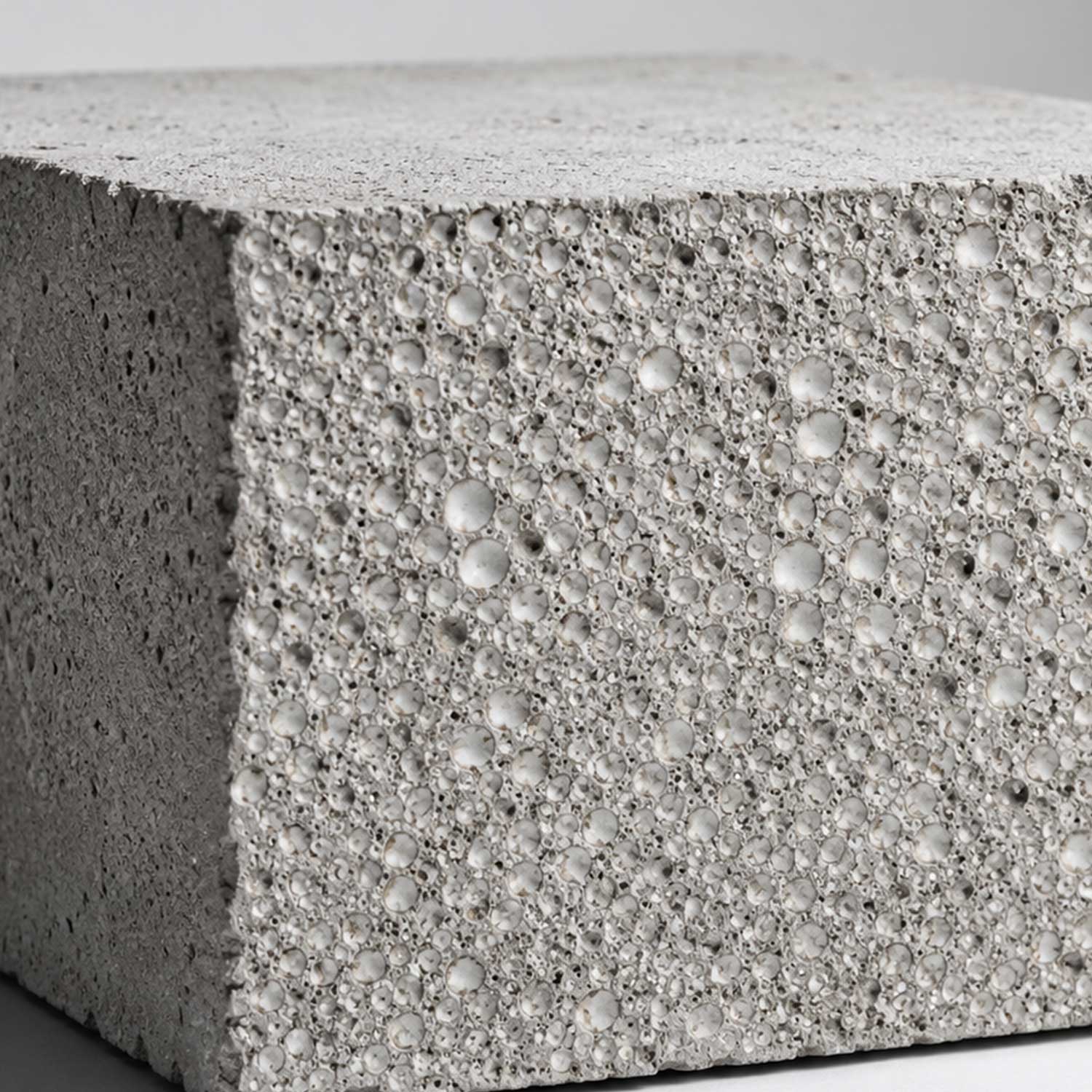
Vermiculite concrete falls into the category of lightweight concrete. Its distinctive feature lies in the aggregate used: here, conventional aggregates are replaced by expanded vermiculite, a very lightweight mineral. The result is a mixture that is significantly less dense than traditional concrete, making it an attractive solution whenever the load on an existing structure needs to be limited.
It is therefore not a concrete designed to bear loads in the same way as traditional structural concrete. Rather, it is used to reduce, level, fill, reach a certain height, and sometimes improve the thermal performance of a floor structure.
What is vermiculite concrete?
Its formulation is based on replacing conventional aggregates with vermiculite. This composition alters the density of the mix and gives it properties suitable for lightweight applications. As a guide, a standard mix for lightweight vermiculite concrete used for screeding typically comprises 1,400 to 1,500 litres of vermiculite, 250 to 300 kg of cement and 400 to 450 litres of water per cubic metre, with no sand in the standard mix.
On site, a simple mixing guide can also be used: 2.5 bags of vermiculite to 1 50 kg bag of cement, with 70 to 75 litres of water. These proportions provide a useful working basis, but they must always be adjusted according to the desired formulation, the intended thickness and the technical constraints of the project.
Finally, vermiculite concrete must be understood as a lightweight functional concrete, not as a structural concrete. Its composition is designed to lighten the mix, not to meet the mechanical performance requirements of conventional load-bearing concrete. This distinction is essential for choosing the right formulation and ensuring the material is used for the correct purpose.
Vermiculite concrete is particularly useful in renovation projects
It is often in renovation projects that vermiculite concrete really comes into its own. On an old floor, a wooden subfloor, a storey or a slab with a limited load-bearing capacity, adding too much weight can quickly become a problem. A lightweight mix therefore allows work to be carried out without unnecessarily adding weight to the existing structure.
It is therefore used for levelling, creating slopes, raising levels or certain lightweight fillings. In other words, wherever the priority is less on high mechanical performance and more on a good balance between weight, volume and ease of application.
Vermiculite also offers thermal benefits. It does not, on its own, transform a screed into a complete insulation system, but it helps to improve the comfort of the substrate. With a thermal conductivity of 0.24 W/m.K, this material confirms its value for floor works requiring both technical correction and thermal improvement.
A vermiculite screed is also valued for its ease of installation on site. The CSTB recommends that the surface is ready for use after approximately 24 hours, provided that indentation is avoided. This is half the time required for a cement screed or setting mortar, where a 48-hour waiting period is necessary. This solution is therefore well-suited to floor repair, levelling and refurbishment work on existing substrates.
When should vermiculite concrete be used?
A lightweight vermiculite screed is primarily chosen for its lightness. This is particularly the case on old floors, on wooden subfloors, on upper floors, or in certain renovation projects, and more generally whenever a subfloor cannot support a solution that is too heavy.
This type of screed is also suitable for creating slopes, levelling and lightweight fillings beneath floor coverings. It is an ideal solution when multiple constraints need to be managed simultaneously: reducing the weight of the structure, controlling the thickness and maintaining thermal performance. It is precisely in this trade-off between weight, thickness and performance that a lightweight vermiculite-based screed comes into its own.
More broadly, lightweight concrete has a lower density than traditional concrete. This difference explains its value in the renovation of existing structures and in levelling works, where every additional load can become a point of concern. Vermiculite thus provides a solution for construction contexts where a conventional approach would be too heavy or less suitable.
However, the choice of a lightweight vermiculite screed must always be guided by a precise technical analysis. Generally speaking, the lighter the concrete, the lower its mechanical performance. It is therefore essential to reserve this formulation for uses compatible with its strength level and to validate the mix design according to the substrate, the intended thickness and the final finish.
Vermiculite concrete or polystyrene lightweight concrete?
Vermiculite concrete and polystyrene lightweight concrete belong to the same family of lightweight aggregate concretes. The main difference between them lies in the type of aggregate used in the mix.
With vermiculite, the aggregate is an expanded mineral. With polystyrene lightweight concrete, the aggregate is synthetic. This is not a minor detail, as it influences the material’s behaviour and its suitability for the construction site.
In practice, vermiculite is often chosen for technical applications where a lightweight, mineral-based and insulating solution is required. Polystyrene, on the other hand, is frequently chosen when the main objective is to achieve the greatest possible lightness.
The right choice is therefore not made ‘based on the product’, but according to the project: permissible load, available thickness, expected insulation level, required strength and final finish.
GRANUTEC®: CMMP’s expanded vermiculite
CMMP supplies GRANUTEC® expanded vermiculite for use in lightweight concrete, lightweight screeds and other technical building formulations. Lightweight, insulating and fire-resistant, this vermiculite is ideal for projects where weight control and substrate performance are critical. It is available in bags, big bags or in bulk, with logistics tailored to the site’s requirements.